
A renovation’s price tag doesn’t tell you whether it will pay off. For Nigerian rental properties, calculate ROI by dividing annual net profit by total cash invested and multiplying by 100; the right percentage depends on rental income and property costs. The high-ROI home improvements for rentals are the ones that strengthen a property’s appeal or function without adding costs the local market can’t support.
It makes sense to focus on upgrades that can attract tenants, support rental income, and keep a property in good condition. A full overhaul isn’t always the best option: targeted improvements may deliver more value when they address what residents need most.
This guide explains how bathroom updates, efficient appliances, modest kitchen refreshes, and space conversions can affect rental returns. You’ll also learn how to weigh each project against its likely effect on rent, operating costs, and appeal in Nigeria.
Key Takeaways
- Prioritise bathroom updates that improve everyday function and give the space a clean, modern feel.
- Consider efficient appliances and brighter lighting for practical appeal and the potential to reduce utility use.
- Refresh kitchen cabinets, hardware, or lighting before committing to a full remodel, and keep choices suited to the rental market.
- Assess whether a basement or attic conversion can add useful living space that supports the property’s appeal and rental returns.
1. Bathroom improvements
A rental bathroom can shape a prospective tenant’s impression alongside the kitchen. According to the National Association of Realtors and National Association of the Remodeling Industry’s 2025 Remodeling Impact Report, bathroom renovations have an estimated 50% cost recovery at resale, while bathroom additions have an estimated 56%. These are resale estimates, not rental ROI figures, but they offer context when weighing project scope.
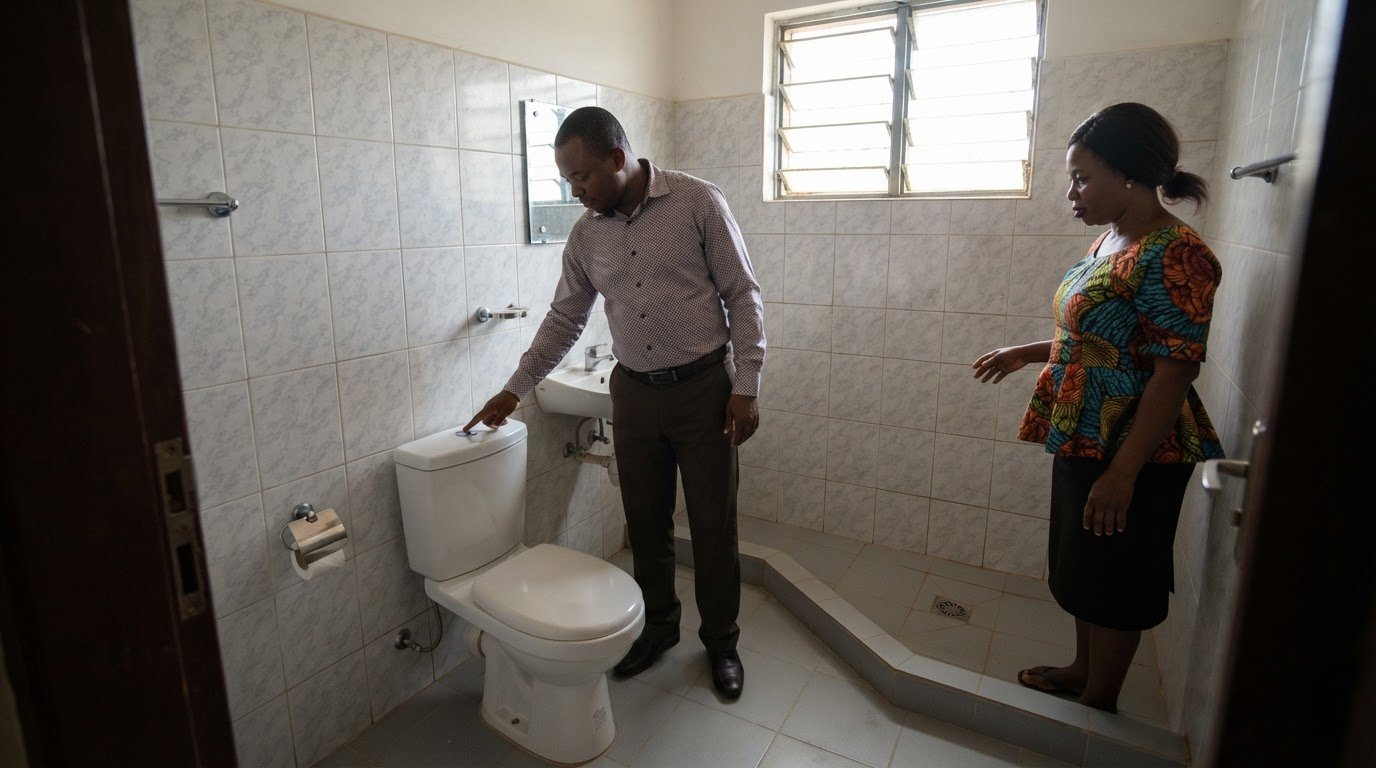
Start with visible fixtures and everyday function. Replace a worn showerhead, faucet, vanity light, or mirror, then re-grout stained tile and fix leaks. A new mirror, brighter lighting, and a clean showerhead, for example, can make a dated bathroom feel more current without changing its layout. Bathroom updates can be high ROI home improvements for rentals when they address visible wear or recurring maintenance.
Compare a renovation’s return with the potential benefits of lower vacancy and tenant retention. Estimate how the upgrade could affect achievable rent, occupancy, and maintenance costs. A bathroom improvement that helps attract a suitable tenant or secure a lease renewal may add value beyond rent alone. Weigh those benefits against the full project cost and likely upkeep.
For Nigerian landlords, record routine repairs, such as replacing a leaking tap, separately from lasting upgrades, such as adding a bathroom. Whether either qualifies for a tax deduction or capital allowance depends on applicable Nigerian tax treatment; the type of work alone does not establish eligibility. Keep invoices and clear records of the work and its purpose.
Building approval requirements in Nigeria depend on the project’s location and scope. Structural changes, a new bathroom, or altered plumbing may need different consideration from replacing a mirror or faucet, so define the work before renovations begin. For a lower-cost refresh, focus on clean grout, working fixtures, updated lighting, and a clear vanity surface. These targeted choices can make high ROI home improvements for rentals by improving presentation without changing the bathroom layout.
2. Energy-efficient appliances
An efficient refrigerator, washing machine, or air conditioner can affect operating costs and a rental’s appeal. Energy-efficient appliances may reduce utility use while giving tenants a practical modern feature. Before buying, compare each model’s energy-use information and capacity with the property’s needs and likely use. A large appliance may not suit a lightly occupied unit.
Start with appliances tenants use regularly. Replacing an ageing refrigerator, for example, can address unreliable cooling while providing a more efficient model. Adding a washing machine to a unit without one may improve convenience, but expected use and maintenance needs should suit the property. Match the purchase to the rental’s size and target residents.
Energy-efficiency upgrades can also include lighting. Replace frequently used bulbs with efficient options and improve illumination in kitchens, bathrooms, and shared areas. Brighter lighting makes work surfaces and entrances easier to use, while efficient lighting can improve functionality and appeal. A kitchen ceiling light, for instance, may be more practical than a single dim fixture.
Treat green upgrades as a considered package, not a collection of purchases. Review existing appliances, identify which use the most electricity during normal operation, and prioritise replacements accordingly. Pairing an efficient refrigerator with improved lighting can address two everyday needs without replacing every appliance at once.
For each proposed purchase, consider the upfront cost, expected electricity use, repair needs, and how the feature supports tenant demand. Utility arrangements matter: when tenants pay their own electricity bills, lower consumption may appeal to them directly; when the owner pays, efficiency may help control operating expenses. Don’t assume every upgrade will support higher rent.
Keep a simple record of each appliance’s model, purchase date, maintenance, and any changes in electricity use. This helps you assess whether the improvement is meeting the rental’s needs over time. Prioritise reliable function and efficient operation over premium features tenants may rarely use.
3. Kitchen refreshes without full remodels
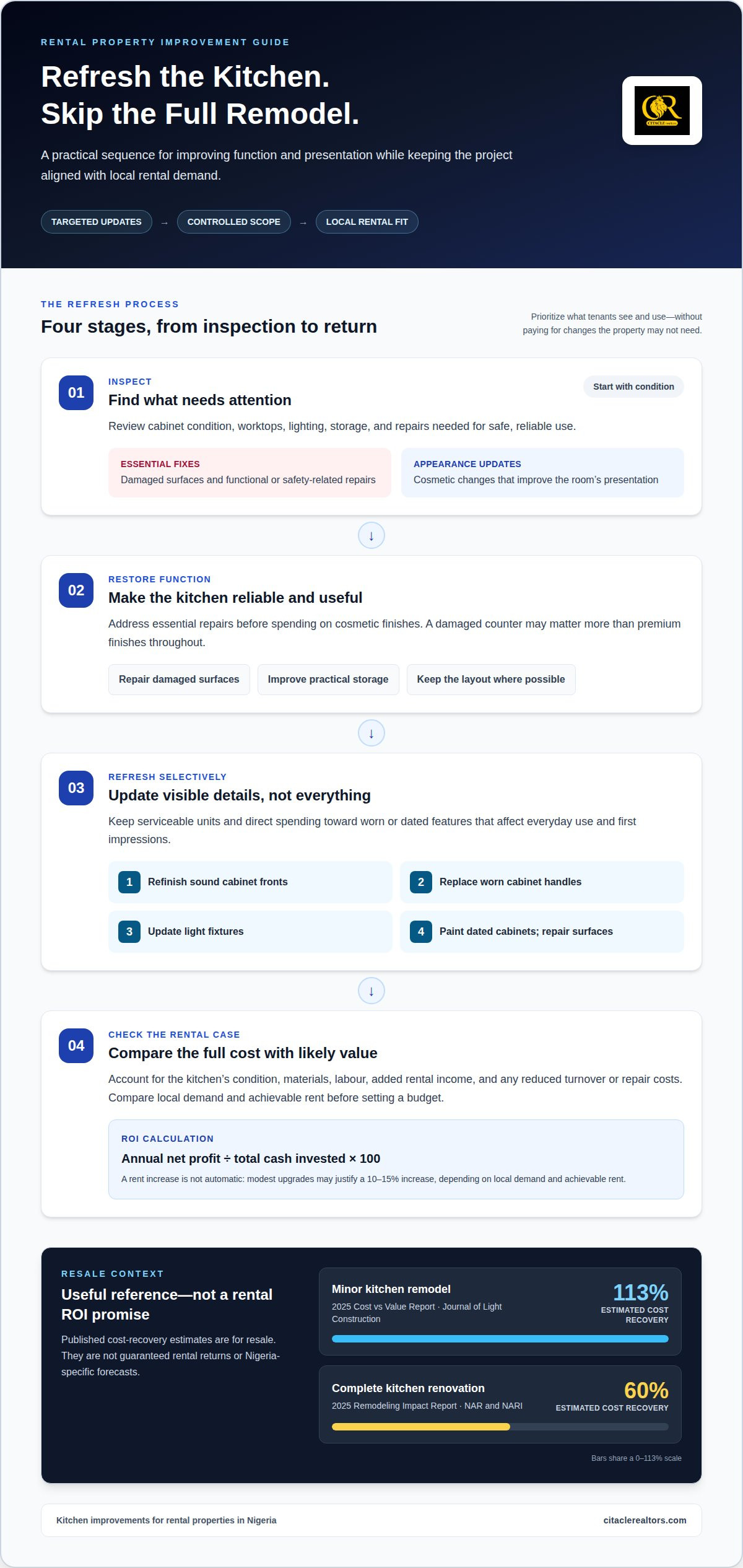
A rental kitchen can feel more current without replacing every cabinet. Refinish sound cabinet fronts, replace worn handles, update light fixtures, and repair damaged surfaces. Repainting dated cabinets and fitting modern hardware, for example, can refresh the room while keeping serviceable units. These cosmetic updates direct spending toward visible wear and everyday function instead of a complete redesign.
The project scope matters. First, assess cabinet condition, worktops, lighting, storage, and repairs needed for safe, reliable use. Then separate essential fixes from appearance upgrades. Replacing a damaged counter may be more valuable than installing premium finishes throughout. Adding shelves or improving storage can also make a compact kitchen easier to use without changing its layout.
For resale context, the Journal of Light Construction’s 2025 Cost vs Value Report estimates 113% cost recovery for a minor kitchen remodel. The National Association of Realtors and National Association of the Remodeling Industry’s 2025 Remodeling Impact Report estimates 60% cost recovery for a complete kitchen renovation. These are resale estimates, not guaranteed rental returns or Nigeria-specific forecasts.
There is no single average renovation cost or rent increase for every Nigerian property. Cost depends on the kitchen’s condition, materials, labour, and project scope. Modest upgrades, such as new cabinet hardware, modern lighting, and fresh paint, may justify rent increases of 10-15%; compare local demand and achievable rent before setting a budget.
To assess return on investment, compare the full project cost with added rental income and reduced turnover or repair costs. A refreshed kitchen could help a well-maintained unit stand out, while a costly countertop may not improve cash flow if tenants don’t value it. Choose durable finishes suited to the property and its target market, then track rent, vacancy, and maintenance after the work is complete.
4. Basement and attic conversions
A basement or attic conversion adds usable space, but rental returns depend on tenant demand and project scope. The National Association of Realtors and National Association of the Remodeling Industry’s 2025 Remodeling Impact Report estimates 71% cost recovery at resale for a basement conversion to living area. It estimates 67% for an attic conversion. These resale figures provide context, not a forecast of rental profit or annual cash flow.
Assess the property’s condition before planning a layout. In a basement, inspect for moisture, drainage concerns, ventilation, safe access, and space for essential services. For an attic, assess access, usable headroom, ventilation, and heat management. Address underlying problems before installing finishes; otherwise, new flooring or wall coverings may conceal issues rather than solve them.
Next, decide how the additional room will be used. A finished basement could serve as a guest bedroom, family area, or children’s playroom. An attic could become a quiet bedroom or flexible living space. Adding a bathroom can make converted space more practical, but plumbing affects the project scope. Prioritise a layout that fits the property and its likely tenants.
To assess the project, compare total renovation costs with the rental income the added space could support. Include ongoing maintenance and likely repairs, not just construction costs. Consider whether the additional room could reduce vacancy or support tenant retention. A conversion that creates useful, durable space can strengthen a rental’s appeal; costly finishes that don’t suit the property can weaken returns.
In Nigeria, the value of a basement or attic conversion depends on the property itself and local rental demand. Where the building lacks suitable space, another upgrade may be a more practical use of capital. Establish the conversion scope, room purpose, and expected operating needs before work begins. For help planning rental property renovations, discuss your property renovation needs.
Citacle Realtors: Duplex Rentals
Citacle Realtors offers Duplex Rentals for people seeking a residential rental in Nigeria. For property owners, Property Management supports the practical work of overseeing a property, while Facilities Management addresses the upkeep of property facilities. These services can help when tenant needs and property maintenance are part of your investment plans.
Choose upgrades that suit the property, its condition, and the residents you want to attract. If you need support with rental ownership or want to explore available duplex rentals, contact Citacle Realtors to discuss your property needs.
Make your next property decision with confidence
Turn renovation ideas into a clear investment plan. Set priorities based on the property’s condition, the residents you want to attract, and the costs your rental income can support. A measured approach to high ROI home improvements for rentals keeps decisions focused on long-term performance, not appearance alone.
Citacle Realtors supports property owners through Property Management and Facilities Management. The team also assists with acquiring residential land. The right conversation depends on whether you’re improving a rental, managing its ongoing needs, or considering a future property investment.
Share your goals and property priorities with Citacle Realtors to explore a practical next step. Contact Citacle Realtors today and move forward with a clearer plan for your property.
Frequently Asked Questions
What is a good ROI percentage for rental properties?
A commonly used benchmark is 6% to 10% annual return after normal expenses, though the right target depends on purchase price, rent, and upkeep. Calculate ROI as annual net profit divided by total cash invested, multiplied by 100. For a Nigerian rental, use collected rent and include recurring maintenance and vacant periods, rather than relying on the asking rent alone.
Which home improvements deliver the highest ROI for rental properties?
No single project delivers the highest rental ROI across Nigerian properties. A repair that removes a barrier to occupancy can outperform a premium upgrade, while adding usable space makes sense when tenants value it. Compare each option’s potential added rent and avoided maintenance costs with the total project cost. Don’t treat resale cost-recovery estimates as forecasts of rental returns.
Do kitchen and bathroom renovations increase rental income enough to justify their cost?
Kitchen or bathroom work is worthwhile when expected additional rent, fewer vacant days, or fewer recurring repairs together justify the total project cost. Estimate achievable rent using comparable local rentals and a realistic occupancy assumption. If the work mainly replaces sound finishes with luxury materials, the rent increase may not justify the added investment, making a targeted repair the stronger financial choice.
Are energy-efficiency upgrades worth the investment for rental properties?
Energy-efficiency upgrades can make sense when appliances or lights are due for replacement and lower energy use matters to occupants or operating expenses. Assess the purchase price, expected electricity consumption, maintenance needs, and who pays utility bills. Replacing a working appliance solely for its efficiency claim may offer less value than choosing an efficient model when the existing one needs replacing.
How do durable, low-maintenance materials affect rental property returns?
Durable finishes can protect returns by reducing cleaning effort, repair frequency, and preparation time between tenants. Hard-wearing tile or suitable vinyl flooring, for example, can be easier to clean than carpet in high-traffic areas. Compare expected service life and repairability with upfront cost: a material that is difficult to replace consistently can add expense even if it lasts well.
What is the average cost and rental-value increase for common rental upgrades?
There is no single average renovation cost; it depends on the kitchen’s condition, materials, labour, and project scope. Modest upgrades such as new cabinet hardware, modern lighting, and fresh paint may justify rent increases of 10-15%, depending on local demand and achievable rent.