
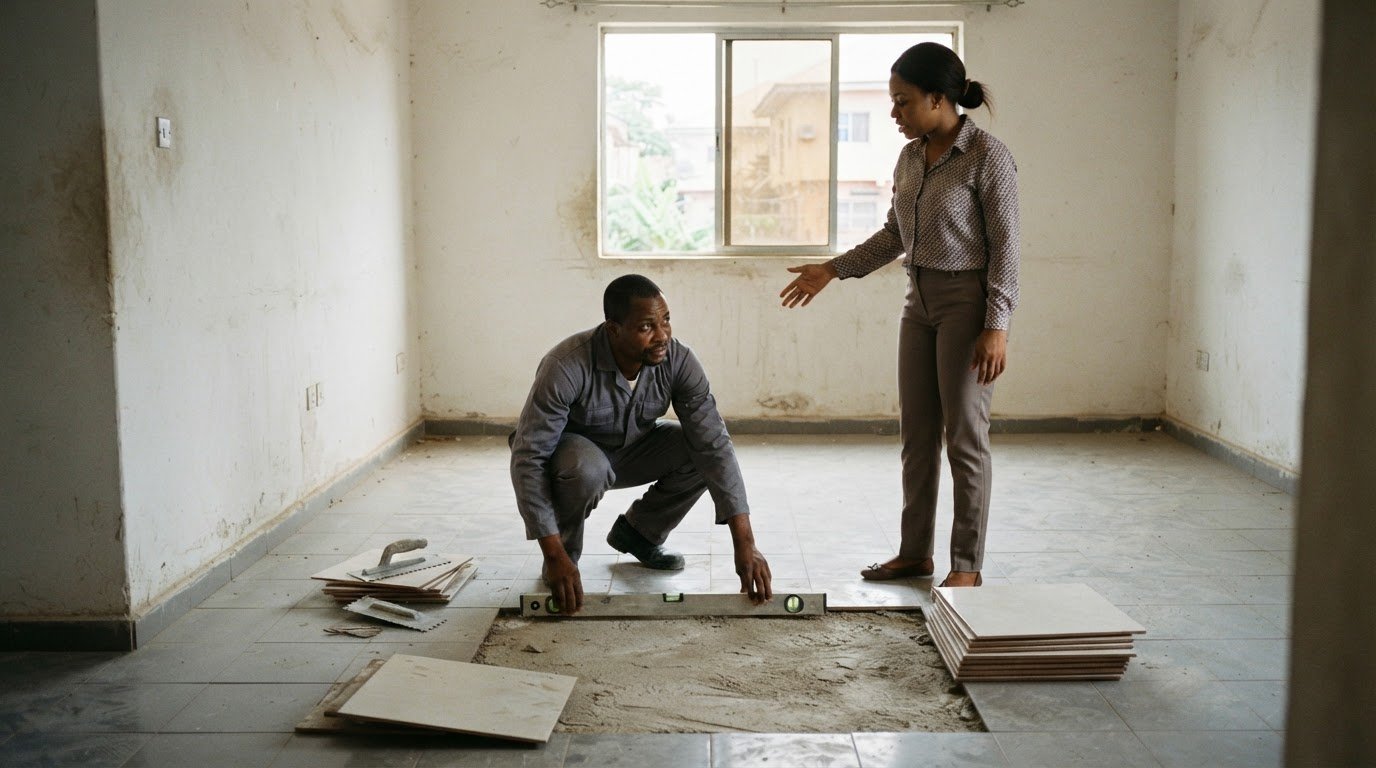
Finding reliable contractors for renovations starts with checking more than a recommendation: ask for references from at least three customers whose projects were similar, then compare at least three written bids based on the same scope of work. Confirm the contractor’s availability, relevant experience, proposed schedule and payment terms before agreeing to proceed. Ask about business liability insurance and Workers’ Compensation coverage, and request current proof.
Price matters, but a low quote alone won’t show whether the materials, timeline or work details meet your expectations. Clear written terms explain what’s included, how changes will be handled and what happens if the schedule shifts.
This guide explains how to assess a contractor’s qualifications and availability, compare quotes, and clarify the contract, payments, project timeline and permits for a renovation in Nigeria. Use these practical checks to find a suitable fit and set clear expectations before work begins.
Key Takeaways
- Match a contractor’s renovation experience to your project, and use past-client feedback to understand how they handle delays and problems.
- Compare bids against the same work specifications, including materials, schedule, and payment stages, rather than choosing by price alone.
- Settle project requirements during an on-site discussion, then record the scope, unanswered questions, and provisional dates in writing.
- Make the contract clear on permits, changes, dispute handling, and completion; agree on what must be finished before final payment.
1. Checking contractor availability and specialisation
Start with the renovation itself: a contractor suited to bathroom repairs may not specialise in structural alterations. Match the contractor’s past work to your project, then review a portfolio for finished examples with similar scope and detail. Ask how many comparable renovations they completed in the past year or two, and whether they can schedule your work within the timeframe you need. Contractors offering fair rates may already be booked months in advance, so discuss start dates before comparing proposals.
Ask family, friends and neighbours for recommendations, but treat each referral as a starting point. Request contact details for at least three former customers whose projects were similar in complexity, and speak with those references before hiring. Ask whether the work finished on time and on budget, whether the result met expectations, and how the contractor handled delays or problems. A contractor who cannot or will not provide references is a reason to look elsewhere.
Check the contractor’s public portfolio, reviews on more than one platform, and social media posts showing work in progress and completed projects. Look for consistent evidence of neat finishes, clear project descriptions and experience relevant to your renovation. One polished photograph or glowing review doesn’t establish a pattern. Compare several examples and look for feedback about similar jobs.
Business history adds useful context. Give preference to contractors who have operated for years or even decades, while still assessing their recent work and references. To spot possible scams or poor workmanship in Nigeria, be cautious if someone pressures you to pay in full upfront, avoids written details, or refuses access to references and relevant project examples. Before agreeing, write down the proposed scope and provisional dates, then compare them with what the contractor has discussed.
2. Comparing bids, schedules, materials and payment terms
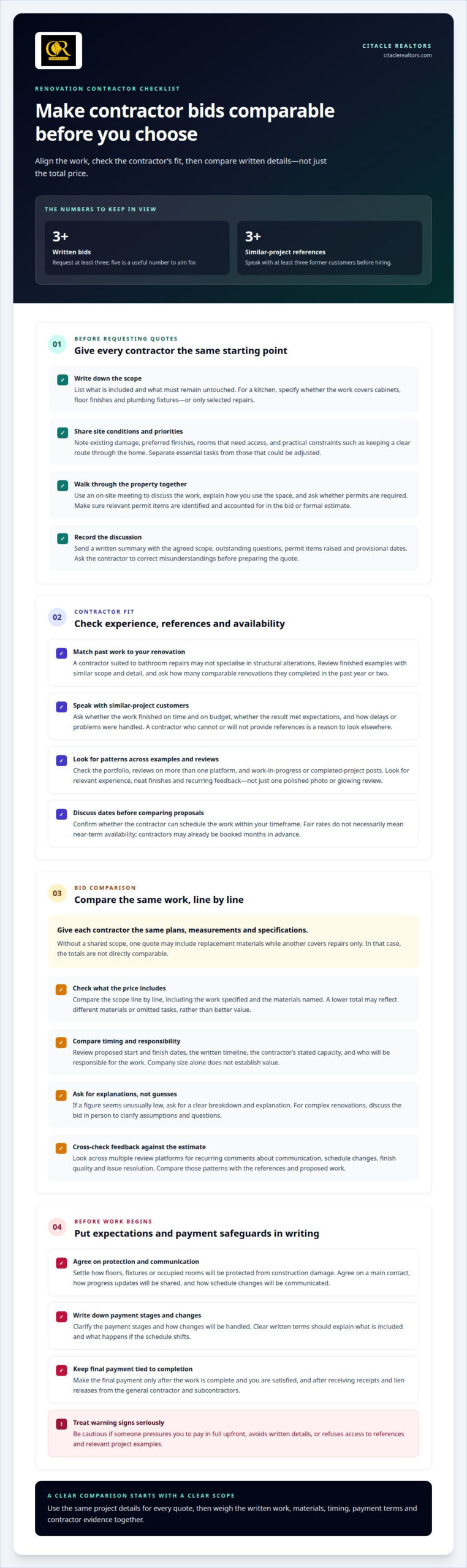
Request at least three written bids; five is a useful number to aim for. Give each contractor the same plans, measurements and specifications, so every estimate addresses the same work. Otherwise, one quote may include replacement materials while another covers repairs only. Compare the scope line by line before treating the totals as comparable.
Look beyond the overall price. Check the materials named in each estimate, the work included, proposed start and finish dates, and payment stages. A lower bid may reflect different materials or omitted tasks, rather than better value. If a figure seems unusually low, ask for a clear breakdown and explanation.
Company size alone doesn’t establish value. A larger team may suit a project with several stages, while a smaller firm may propose a different schedule or work structure. Compare each contractor’s stated capacity, who will be responsible for the work, and the written timeline. For a complex renovation, discuss the bid in person to clarify assumptions and ask questions.
Compare feedback across multiple review platforms instead of relying on one site. Look for recurring comments about communication, schedule changes, finish quality and how issues were resolved. Compare those patterns with the estimate and references. Consistency between customer feedback and the proposed work offers more useful context than a single rating.
Before accepting a bid, agree on the work schedule and how floors, fixtures or occupied rooms will be protected from construction damage. Put payment stages and any changes in writing. Make the final payment only after the work is complete and you’re satisfied, and after receiving receipts and lien releases from the general contractor and subcontractors. A clear estimate can also help you plan property renovation work with defined expectations.
3. Clarifying project requirements before requesting quotes
Write down the renovation scope before contractors visit. For a kitchen, specify whether the work covers cabinets, floor finishes and plumbing fixtures, or only selected repairs. Note what must remain untouched, which rooms need access, and practical constraints, such as keeping a clear route through the home. This gives every contractor the same starting point for assessing the work.
Arrange an on-site meeting to walk through the property and discuss priorities. Point out existing damage, explain your preferred finish, and describe how you use the space. Agree which tasks are essential and which could be adjusted if the estimate requires changes. Ask whether the project requires permits, and ensure the relevant permits are identified and accounted for in the bid or formal estimate.
Instagram can help you discover renovation projects around your Nigerian community. Search local place tags and renovation-related posts, then examine project photos for finishes and work similar to yours. A post is a lead, not proof of a contractor’s overall performance. Use it to start a conversation, request the business’s contact information, and compare the project with references or examples discussed earlier.
Set communication expectations before work begins. Agree who your main contact will be, how progress updates will be shared, and how quickly you’ll be told about schedule changes. For example, arrange to hear in advance about changes affecting room access or a planned installation. Friends who have managed renovations can also suggest practical questions about site access and daily coordination.
After an initial call, send a written summary of the discussion. Include the agreed scope, outstanding questions, permit items raised and provisional dates. Ask the contractor to correct any misunderstandings before preparing the quote. This record keeps your requirements consistent across site visits and gives both sides a reference if the work or timing changes.
4. Contracts, deposits, timelines, and permits
For a renovation in Nigeria, put the agreed terms in writing before work starts. The contract should identify the property, scope, materials, schedule, payment terms, permit responsibilities, and how changes or disagreements will be handled. These details help both parties understand the same plan. They’re practical safeguards, not a claim that every contract must follow an identical legal template.
Set out the deposit and later payment stages, including which work each payment covers. Don’t rely on a verbal promise or pay the full amount before completion. Record how extra work will be approved and priced, and keep receipts for every payment. Before releasing the final instalment, inspect the finished work against the agreed scope and note anything incomplete.
Record the start date, expected completion date, work schedule, and how delays will be communicated. Include arrangements for protecting occupied rooms, floors, fixtures and belongings during construction. Ask for a written warranty that describes what it covers and how long it lasts. If the contractor says they’re insured, record the coverage they say applies to the project.
Permit requirements can depend on the location and type of renovation. Ask which permits are needed, who will arrange them, and how related costs will appear in the estimate. Keep copies of applications or approvals with the contract. Treat suggestions to avoid a required permit as a warning sign; recommendations from friends don’t replace written clarity on compliance.
Before signing, read every clause and make sure the contract reflects the final scope, payment stages, dates, and change process. Keep a signed copy and use it to track progress and document agreed changes. For renovation work with defined responsibilities and timelines, discuss your renovation project with a team that handles property renovations.
Citacle Realtors: Property Renovations
Citacle Realtors provides Property Renovations for owners planning improvements and seeking a clear path from project requirements to completed work. Turn to the service when your renovation needs professional attention, whether you’re updating a space or addressing work identified during property oversight. A defined scope, agreed priorities and documented expectations help keep decisions focused throughout the project.
If you’re also responsible for a property’s ongoing upkeep, Property Management and Facilities Management can support those broader responsibilities. For your renovation, use the checks in this guide to clarify your needs and the terms that matter. Contact Citacle Realtors to discuss your property renovation.
Move your renovation from plan to progress
A renovation is also an opportunity to make your property work better for the way you live. Before committing, decide what a successful result should change, from a room’s comfort to the everyday function of your home. That priority can guide your choices when new details emerge during the work.
Finding reliable contractors for renovations is ultimately about building a working relationship around shared expectations. Keep decisions clear, record changes as they arise, and make space for timely conversations throughout the project. If you’re ready to discuss your property renovation with a team that understands property needs, start a conversation with Citacle Realtors.
With a clear purpose and open communication, you can take the next step with confidence and shape a home that serves you well.
Frequently Asked Questions
Do you carry Workers’ Compensation and business liability insurance?
Before renovation work starts, establish what insurance coverage applies and request current proof of business liability insurance and Workers’ Compensation coverage. The documents should identify the insured party and policy validity dates, so you can see whether they cover the business carrying out your project. Record the agreed insurance arrangements with the project paperwork rather than relying on verbal assurances.
How do I find reliable renovation contractors in Nigeria?
Finding reliable contractors for renovations in Nigeria starts with recommendations from people who have completed comparable work. Then assess whether each contractor’s experience suits your property and project. Experience with interior finishes, for example, may not demonstrate capability with a major structural alteration. Review recent examples and customer feedback, and use an on-site discussion to assess how clearly the contractor understands your requirements.
How do I check a contractor’s CAC registration and credentials in Nigeria?
Ask for the contractor’s exact registered business name and CAC registration details, then compare them with the name on the estimate, contract and payment instructions. If the names differ, ask for the relationship between the business and contracting party to be documented. Review credentials relevant to the specific work, and ensure the person responsible is identified in writing.
How do I verify a renovation contractor’s references and previous projects?
Choose references connected to work similar to yours, then ask each former client about the finished result and their experience after handover. For a project involving new fittings, ask whether they worked as expected and whether follow-up issues arose. Where possible, compare the client’s account with dated project photos or a site visit to assess whether the examples reflect the workmanship you need.
What questions should I ask before hiring a renovation contractor?
Ask who will supervise the work, who will be on site, and how proposed changes will be approved. Clarify how the contractor will handle unexpected issues, such as discovering damaged pipework after opening a wall. Ask what decisions you need to make before work starts and what information you’ll receive in progress updates. Clear answers help ensure expectations are understood.
How do I compare renovation quotes and payment schedules in Nigeria?
A key step in finding reliable contractors for renovations is comparing each quote’s assumptions, exclusions, material descriptions, labour, waste removal and provisional items. A quote that excludes disposal differs from one that includes it. Check that each payment stage corresponds to identifiable work or materials, and keep receipts. This makes proposals easier to assess without judging by the total alone.