A promising plot can still hide a boundary, ownership or planning problem. Four checks can help you avoid common land buying mistakes in Nigeria: review a current survey, examine the seller’s records, compare local land values and development plans, and conduct a title search before committing. Each check adds a different piece of information, from the land’s physical boundaries to rights and plans that may affect its use.
It’s understandable to focus first on location and price, but reviewing the land and its paperwork carefully can help you make a more informed decision. This guide explains what to check in surveys, seller documents, local market conditions and title records, and how these checks relate to your intended use. You’ll also learn why infrastructure and development plans matter when assessing value, and when an ownership dispute, lien or easement needs closer attention. A clear process can help you approach a purchase with greater confidence and fewer surprises.
Key Takeaways
- Use a professional survey to clarify boundaries and spot easements or encroachments before purchase.
- Review the seller’s records and the land’s legal history to identify gaps that could complicate the transaction.
- Compare nearby land values and consider planned infrastructure to judge whether the location suits your future plans.
- Run a title search to uncover ownership disputes, liens, mortgages or usage rights that may affect the land.
1. What is a Land Survey, and Why is It So Important?
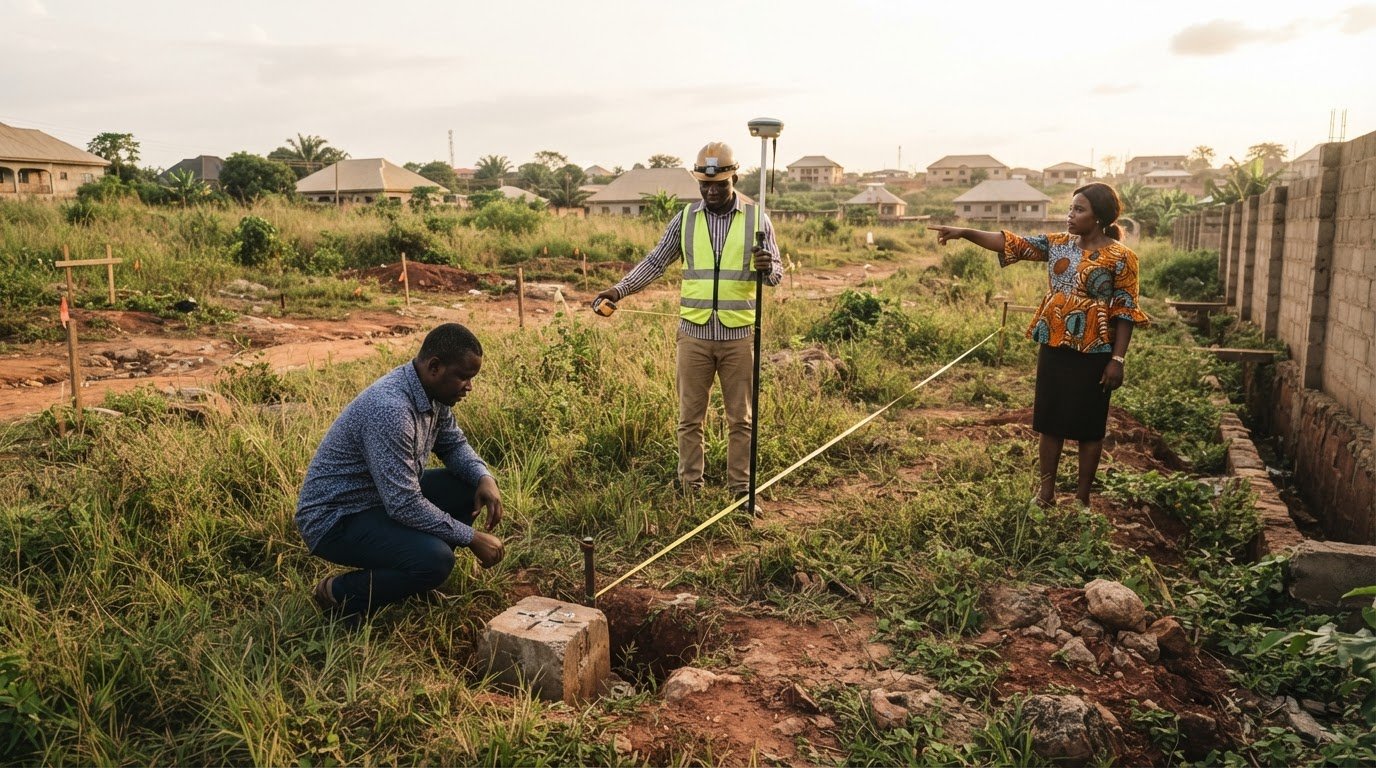
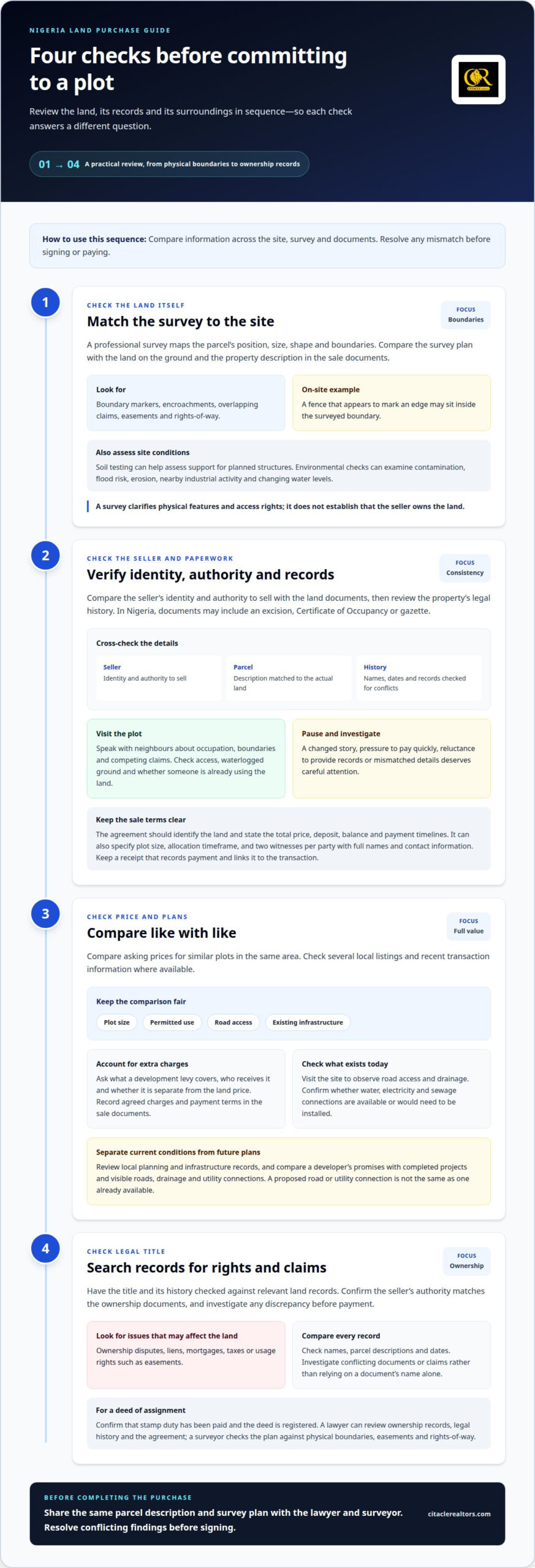
A land survey maps a parcel’s position, size, shape and boundaries. Before paying, compare the survey plan with the land on the ground and the property description in the sale documents. A surveyor can identify boundary lines, boundary markers, encroachments and overlapping claims. For example, a fence that appears to mark an edge may sit inside the surveyed boundary. Resolve any discrepancy before signing to help prevent later disputes and ensure the agreement describes the land being sold.
Ask a professional surveyor to identify easements and rights-of-way on the parcel. These may give others the right to use parts of the land, such as a shared driveway, drainage route, utility access or public path. A survey can show where these rights affect the boundaries, but it does not establish that the seller owns the land. Treat it as one part of a wider review, not a substitute for title checks.
Complete soil and environmental checks alongside the survey. Soil testing can help assess whether the ground can support the structures you plan to build. Environmental checks can examine possible contamination in soil or water, flood risk, erosion, nearby industrial activity and changing water levels. These findings may affect how you can use the parcel. Reviewing them before purchase helps you account for practical site conditions.
Should you use a lawyer or surveyor when buying land? Both can help because they assess different risks. A surveyor checks the plan against physical boundaries, easements and rights-of-way; a lawyer reviews ownership records, the land’s legal history and the agreement. Share the same parcel description and survey plan with both so their findings relate to the specific land. If their records or observations conflict, resolve the discrepancy before completing the purchase.
2. Checking seller credibility and documentation
A seller’s confidence or polished real estate presentation doesn’t establish ownership. Compare the seller’s identity and authority to sell with the land documents, then review the property’s legal history. In Nigeria, title documents may include an excision, Certificate of Occupancy or gazette. A document’s name alone doesn’t prove that it covers the specific parcel, so match its description to the land and investigate inconsistencies before paying.
Visit the residential land in person and speak with neighbours about occupation, boundaries and any competing claims. A visit can reveal details online images may miss, such as access problems, waterlogged ground or someone already using the plot. Ask the seller to explain any mismatch between the site and the documents. A changed story, pressure to pay quickly or reluctance to provide records deserves careful attention.
What should a land sale agreement and payment receipt include in Nigeria? The agreement should identify the land and state the total price, deposit, balance and payment timelines. It can also specify the plot size, allocation timeframe, and two witnesses per party, with their full names and contact information. Keep a receipt that records the payment and links it to the transaction.
How can you verify ownership and title documents in Nigeria? Have the title and its history checked against the relevant land records, and ensure the seller’s authority matches the ownership documents. A deed of assignment should have stamp duty paid and be registered. How can you spot forged documents or multiple sales? Compare names, parcel descriptions and dates across the records, then investigate conflicting documents or claims before making payment.
Confirm zoning and permitted use with the applicable planning records. “Buildable” can mean that rules permit construction, or that the parcel’s physical characteristics suit the intended structure. Check whether your planned use needs permits and whether land-use restrictions or environmental conditions could affect it. These checks help protect your investment and make your decision more informed. To explore residential land options, consider how each parcel’s records and permitted use align with your plans.
3. Researching local land values and development plans
Compare asking prices for similar plots in the same area before judging value. Match plot size, permitted use, road access and existing infrastructure, because these affect what you are buying. Check several local listings and recent transaction information where available. Differences in access or services can make an apparently attractive investment harder to assess.
Clarify every additional charge before agreeing to buy. Ask what a development levy covers, who receives it and whether it is separate from the land price. Record agreed charges and payment terms in the sale documents. This helps you compare the full financial commitment rather than focusing only on the advertised figure.
Assess a developer’s history by reviewing completed projects and the condition of their infrastructure. Compare what was promised with visible roads, drainage and utility connections. A development plan may describe future works, but the land’s present access and services still matter. Consider whether the project’s quality supports your intended use and whether planned infrastructure could change access or value. Don’t assume a proposed road or utility connection is already available.
How can you check road access, drainage, utilities and development plans before buying land? Visit the site, observe access and drainage conditions, and compare them with local planning and infrastructure records. Confirm whether water, electricity and sewage connections are available or would need to be installed. Then assess how nearby services, development plans and permitted land use align with your plans.
Future growth can influence resale potential, but it shouldn’t replace practical checks. Consider population growth, accessibility and whether the location can adapt to changing needs. Compare the land’s current condition with the proposed development, and account for infrastructure costs when assessing value. These steps help you make an informed decision without overlooking rights and restrictions that may shape how the parcel can be used.
4. Title searches, ownership disputes, liens, and taxes
A title search adds a records-based check to your review of the seller’s documents. It can reveal unpaid taxes, liens or mortgages, ownership disputes, and easements or usage rights affecting the parcel. These issues matter because a seller’s possession of documents alone doesn’t establish clear ownership. Ask a property lawyer to review the title history and identify claims or restrictions that could affect your intended use.
To confirm the seller’s ownership, compare the seller’s identity and authority with the title records and transaction documents. Check that the parcel description matches across the records, survey plan and sale agreement. If names, boundaries or ownership history differ, resolve the inconsistency before payment. A title search can also show whether another party has a recorded interest, such as a mortgage or right to use part of the land.
Include the deed of assignment in the legal review. In Nigeria, the deed should have stamp duty paid and be registered. Keep copies of the executed agreement, payment evidence and relevant title documents together. This creates a clear transaction record and helps your lawyer trace what was transferred, by whom and for which land.
What extra costs and taxes apply when buying land in Nigeria? Budget for registration, taxes, legal and surveying expenses, utility or infrastructure setup, and ongoing maintenance. The amounts depend on the parcel, transaction and applicable charges, so include each known cost in your ownership budget rather than considering only the purchase price.
Due diligence should also consider whether the land’s mineral or logging rights belong to someone else, and whether those rights could interfere with your plans. Ask for the rights to be addressed in the transaction review. If a title search reveals disputed ownership, an unpaid charge or an easement, pause the purchase until its effect is understood. For help assessing a residential land purchase, explore land options with Citacle Realtors.
Citacle Realtors: Residential Land Sales
Citacle Realtors offers residential land sales for people considering a land purchase in Nigeria. After reviewing boundaries, seller documents, local conditions and title records, turn to Citacle to explore land options that suit your plans. Consider your intended use, preferred location and practical priorities before narrowing your choice. These details can guide a focused conversation about residential land opportunities. A land purchase is a significant decision, so apply the checks discussed above when evaluating any parcel and its documentation. If you’re ready to discuss residential land, contact Citacle Realtors.
Choose your next step with a clear purpose
Before moving forward, decide what you need the land to make possible. A home site, a long-term investment and a future family asset can call for different priorities. Common land buying mistakes often begin when a buyer commits before defining that purpose. Write down your intended use and the features that matter most, then let them guide your decision rather than urgency.
Give yourself room to consider how the parcel fits your plans and the responsibilities that come with ownership. If questions remain about which residential land opportunity aligns with your goals, a focused discussion can help you consider the next step. Contact Citacle Realtors for land buying guidance, and move ahead with a clear sense of what you want to achieve.
Frequently Asked Questions
Need Guidance Before You Buy?
Yes, get guidance before making an offer, especially if you’re unsure how the land fits your plans. Write down your intended use, preferred location and key requirements, then use them to assess suitable options. Citacle Realtors can discuss residential land opportunities, while independent legal and surveying reviews address ownership and site questions. Keeping those roles clear helps you understand which questions each professional can answer.
Top Mistakes When Buying Land: Are You Covered?
No single document or conversation covers every risk in a land purchase. A seller’s assurance, a survey plan and a title record each address different details, so relying on just one can leave gaps. For example, clear ownership records don’t establish that the land suits your building plans. Treat your review as a set of complementary checks, and resolve conflicting information before committing funds.
What is Due Diligence in Land Transactions?
Due diligence means gathering and comparing information about a parcel before committing to buy it. To organise the process, keep a record of each document received, the question it answers and any unresolved discrepancy. For instance, note when a plot description differs between an offer letter and a survey plan. This makes open issues easier to see when making a decision.
What is a Land Survey, and Why is It So Important?
A land survey records the parcel’s measured boundaries and location, helping establish which piece of land the transaction concerns. It’s especially useful if a plot has been divided, its markers are unclear or the seller presents an older plan. Ask the surveyor to explain how the plan corresponds with the parcel being offered. A survey supports site identification, but it doesn’t by itself establish ownership.
What are the most common mistakes when buying land in Nigeria?
Common land buying mistakes to avoid include rushing a decision, relying on verbal assurances and judging a plot only by its advertised price. Buyers can also overlook whether the parcel’s permitted use matches their plans. For example, someone intending residential use shouldn’t assume every plot marketed as “buildable” has the same planning status or physical suitability. Assess each decision against your intended use.
How do I check for government acquisition or land-use restrictions in Nigeria?
Compare the parcel’s identifying details with relevant land records and planning information for its area. Find out whether the land is affected by an acquisition designation, permitted-use restriction or anticipated zoning change, and ensure the records relate to the exact parcel. A general description of a neighbourhood cannot establish the status of an individual plot. Keep written findings with the transaction documents for reference.