
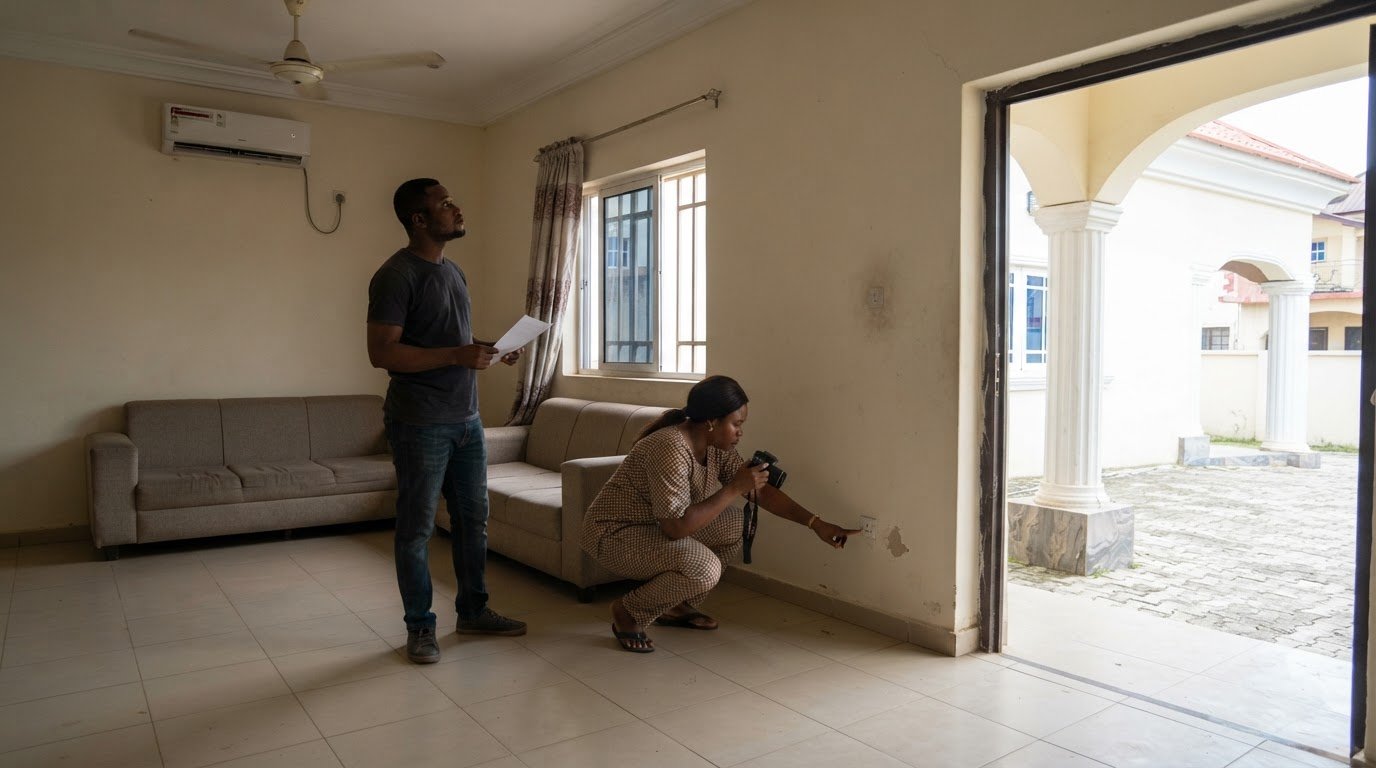
A clear rental property inventory records a home’s condition, contents, existing wear and damage, and relevant details such as keys and meter readings. Prepare a fresh, dated record for each new tenancy, even if the property appears unchanged; learning how to conduct a rental property inventory means creating a useful starting point for comparing its condition later. Add photographs to support written descriptions and make the record easy to review.
When conducting a rental property inventory, record the condition of the property at the start of each tenancy. Create a new record for every move-in, even if nothing appears to have changed. This gives both parties a clear baseline for comparing the property at check-out.
This guide explains what to include, how to inspect and document each room, and how to use the inventory alongside check-out records when disagreements arise over damage, deposits or insurance claims. You’ll also learn how consistent records make property oversight more organised and reliable.
Key Takeaways
- Prepare a fresh, dated inventory for each tenancy so the record reflects the property at that tenant’s move-in.
- Pair clear room-by-room notes with photographs, meter readings and a record of keys provided.
- Use consistent descriptions and photo angles at check-in and check-out to make changes easier to compare.
- Keep the inventory with tenancy records to support clear discussions about property condition, deposit disputes and insurance claims.
Do I need a separate inventory for each tenant?
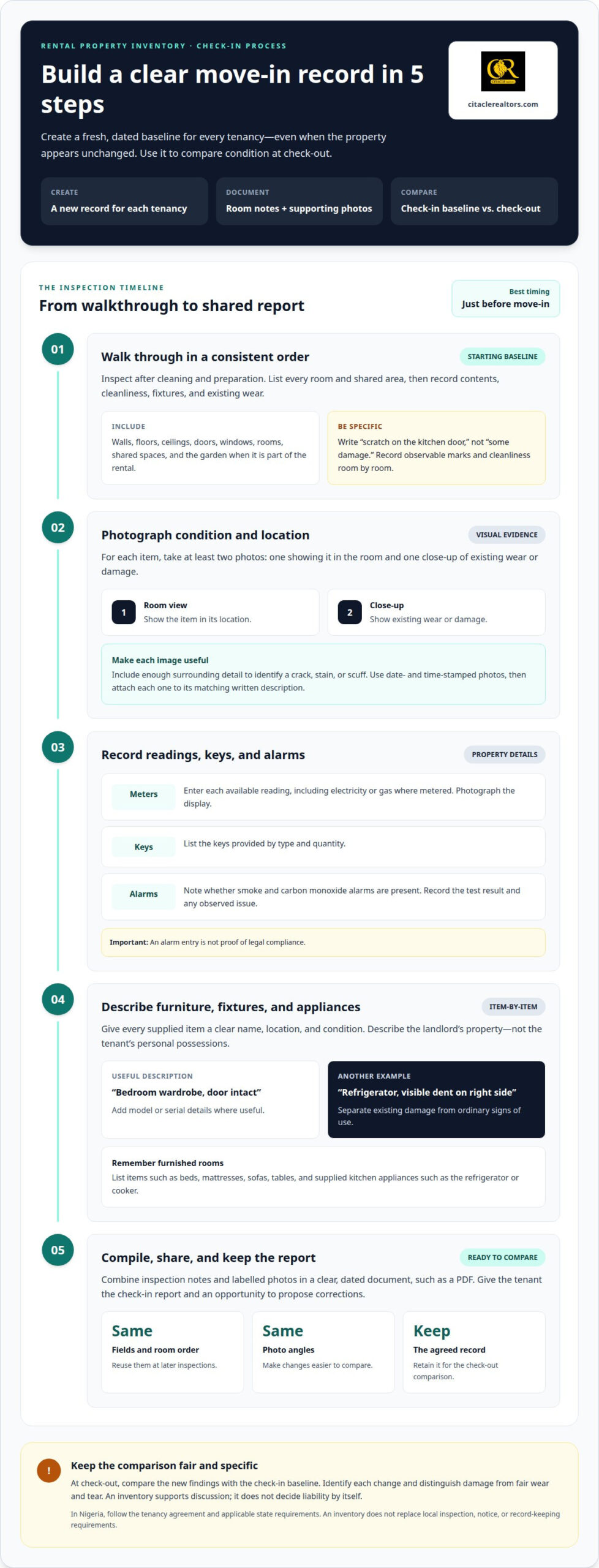
Yes. Prepare a fresh, dated check-in inventory for every tenancy, even if the property appears unchanged. The check-in records the starting condition; the check-out inspection documents its condition at departure and compares changes against that baseline. In Nigeria, follow the tenancy agreement and applicable state requirements; an inventory does not replace local inspection, notice or record-keeping requirements.
- Inspect just before move-in. Walk through after cleaning and preparation, using the same room order for future inspections. List each room and shared area, then note its contents, cleanliness, fixtures and existing wear and tear. Record marks precisely, such as a scratch on the kitchen door, rather than writing “some damage.”
- Photograph condition and location. Take at least two photos of each item: one showing it in the room and another close-up of existing wear or damage. Include enough surrounding detail to identify where a crack, stain or scuff appears. Use date- and time-stamped photos, and attach them to the matching written descriptions as supporting evidence.
- Record readings, keys and alarms. Enter each available meter reading, including electricity or gas where metered, and photograph the display. List the keys provided by type and quantity. Note whether smoke and carbon monoxide alarms are present, then record the test result and any observed issue without treating the entry as proof of legal compliance.
- Describe appliances and furniture. Give each item a clear name, location and condition, such as “bedroom wardrobe, door intact” or “refrigerator, visible dent on right side.” Add model or serial details where useful, and distinguish existing damage from ordinary signs of use.
- Compile and share the report. Combine inspection notes and labelled photos in a clear, dated document, such as a PDF. Reuse the same fields, room order and photo angles at later inspections so comparisons are consistent. Give the tenant the check-in report and an opportunity to propose corrections; retain the agreed record for the check-out comparison.
What is a rental property inventory?
A rental property inventory is a written record of the property’s condition and contents. At the start of the tenancy, describe each area, what is present and its condition.
-
Record Property Features and Condition
Walk through the property and record the condition of walls, floors, ceilings, doors and windows. Note specific details, such as a cracked bathroom tile, a chipped door edge or a window that does not close smoothly. Describe existing marks rather than using broad labels such as “worn.” This schedule of condition gives landlords and tenants a practical reference for comparing the property later and discussing changes.
-
Document Room Condition and Cleanliness
Inspect each room separately and record its condition and cleanliness under a clear label, such as “kitchen” or “main bedroom.” Include shared spaces and the garden if they form part of the rental property. Note observable details, such as whether worktops are clean, floors are stained or bathroom surfaces show mould. Keep rooms in separate entries so it is clear which area each description covers and easier to compare later.
-
List Furniture, Fixtures, and Appliances
List the furniture, fixtures and appliances supplied with the property, placing each item in its room. Describe condition with concrete observations: “dining table, stable, light surface scratches” is more useful than “table, good.” For a furnished rental, include beds, mattresses, sofas and tables; in the kitchen, note supplied appliances such as the refrigerator or cooker. The inventory should describe the landlord’s property, not the tenant’s personal possessions. Property management support can help landlords keep property records organised.
Why inventories support deposit disputes and insurance claims
A detailed inventory can help resolve damage and deposit disputes by comparing the recorded starting condition with the property at check-out. Dated observations and photographs support the discussion, but the inventory does not decide liability by itself.
-
Use Inventory Evidence in Deposit Disputes
Compare the check-in inventory with the check-out findings, then identify each change clearly. For example, compare a move-in photograph showing an unmarked wall with a later image showing a new hole. Distinguish damage from fair wear and tear, the gradual deterioration caused by normal use. A landlord seeking a deposit deduction should show that the damage goes beyond ordinary wear and tear.
-
Support Dispute Resolution With Inventory Records
Before discussing a disagreement, gather the relevant descriptions, inspection notes and photographs. Match each image to its room and item, and explain what changed between inspections. Clear records help landlords and tenants focus on evidence rather than conflicting recollections. A general note such as “poor condition” does not establish a specific loss.
- Keep evidence organised. Store the dated inventory, check-out report, tenancy agreement and related communications together. If a deposit protection scheme applies to the tenancy, retain its records with the same file. Clear records make it easier to trace which condition was documented, when it was observed and what both parties discussed.
- Use inventory records carefully for insurance. The report can document the property’s condition and contents, helping describe a loss or damage when preparing an insurance claim. Add relevant inspection photographs and repair records, and distinguish damage to the property from damage to a tenant’s belongings. Fair wear and tear is not covered by a landlord’s insurance or a tenant’s deposit, so describe the actual event or change rather than labelling ordinary deterioration as damage.
Why rental properties need an inventory
- Give each agreement a useful baseline. A detailed record can clarify what the landlord supplied and the condition of furniture or fittings at handover. Knowing how to conduct a rental property inventory also means recording details that help distinguish earlier maintenance issues from later changes. For example, note whether a cupboard door was already misaligned before the tenant moved in.
- Support practical maintenance decisions. Compare inspection records over time to spot changes that may need attention. A note about a small ceiling stain, followed by a later observation that it has spread, gives a more useful timeline than “ceiling needs work.” Keep repair updates beside the relevant entry so future decisions have context.
- Make records easier to use between tenancies. Apply the same room names and condition fields each time the property is let. If one report describes a bedroom wardrobe as “good” and another records its door and hinges separately, the more detailed entry supports a clearer comparison. Consistent records also help a new letting agent understand the property’s history.
- Choose a clear inspection process. A landlord can prepare the report or use an inventory clerk to create an independent record. Identify who inspected the property and when, and keep the report with the tenancy agreement. For anyone deciding how to conduct a rental property inventory, accuracy and readability matter more than a complicated template.
- Connect the record to ongoing oversight. Store inventory notes with maintenance records, inspection findings and tenancy documents. This makes it easier to understand a property’s history before arranging work or reviewing its condition. If you want coordinated oversight of rental responsibilities, explore Citacle Realtors’ property management.
Citacle Realtors: Property Management
Citacle Realtors provides Property Management for property owners who want organised oversight of their rental homes. This can help when coordinating tenancy records, property condition and ongoing management becomes difficult to handle alone.
A consistent inventory process works best alongside clear property oversight. Keep the report with relevant tenancy documents and maintenance records to make the home’s condition easier to track over time. For owners managing rental homes, Property Management can bring these responsibilities into a more coordinated process.
To discuss Property Management for your rental property, contact Citacle Realtors or visit citaclerealtors.com.
Build a More Consistent Property Routine
Make the inventory part of your regular property routine, not just a document created when a tenancy changes. Decide who will maintain the records, where updates will be stored and how observations will inform maintenance and ownership decisions. A repeatable process helps you manage each home with greater clarity.
When deciding how to conduct a rental property inventory, consider how ongoing property oversight fits your plans. Citacle Realtors provides Property Management and Facilities Management, as well as Residential Land Sales for those considering a different property investment direction. These services address distinct needs, from managing existing assets to exploring residential land opportunities.
For support with your property plans, contact Citacle Realtors. A thoughtful next step can help you move forward with confidence.
Frequently Asked Questions
Does my landlord have to do an inventory?
Make an inventory part of the move-in process, but don’t assume the same rules apply identically across Nigeria. The tenancy agreement and applicable state requirements matter; rules from England should not be treated as Nigerian law. If your agreement describes an inventory or condition report, keep a copy and note how both parties will record corrections and compare the property when the tenancy ends.
How do I build an inspection report tenants can review?
Use a room-by-room document with clear labels, plain descriptions of condition and space for tenant comments. For example, write “living room, left wall” rather than “wall marked.” Share the report in a readable format and invite the tenant to flag missing details or disagreements. Keep the original and any revised copy so the record shows what changed and which version both parties reviewed.
What is Fair Wear and Tear?
Fair wear and tear is the gradual deterioration caused by ordinary use, rather than careless or intentional damage. Faded paint in a frequently used hallway or slight carpet flattening may reflect normal use; a burn mark or broken fitting points to a different cause. Consider the item’s original condition and the nature of the change before describing it as damage.
What is a rental property inventory and why is it important?
A rental property inventory records the home’s condition and the items supplied with it, providing a clear reference during the tenancy. For instance, noting an appliance’s model details can help distinguish the landlord’s refrigerator from a tenant’s replacement. A well-kept record also gives both parties a shared reference when discussing repairs, missing contents or changes to the property.
What should a rental property inventory include room by room?
Describe each room’s surfaces, fittings, supplied items and visible condition, then include shared spaces and any garden that comes with the rental. In a kitchen, cover cupboards, worktops and supplied appliances; in a bathroom, note the basin, taps and visible condition of surfaces. For an unfurnished home, record built-in features and existing fixtures, not just movable furniture.
What photos and videos should landlords take for an inventory?
Take clear images of the whole room and close-ups of notable marks, with enough context to locate each detail. Capture supplied items, visible wear, meter displays and areas that may be difficult to describe in writing. A short video walkthrough can add context, but keep written notes as well. Label files by room and date, and store them with the report.