

A difficult tenant doesn’t give a landlord the right to bypass the law. Knowing how to deal with difficult tenants legally in Nigeria starts with understanding that landlord and tenant rules vary by jurisdiction, and a landlord cannot evict a tenant without a court-granted possession order. Across the country, applicable tenancy laws clearly outline landlord and tenant rights and obligations.
It’s understandable to want a quick resolution when rent is late, lease terms are breached, or property is damaged. A measured response protects your position: document the issue, communicate calmly, follow the tenancy agreement, and use the proper notice and court procedures if you need to recover possession. Changing locks or disconnecting utilities to force a tenant out can create further legal problems.
This guide explains practical ways to address common disputes, negotiate or use mediation where appropriate, serve notices in line with applicable rules, and enforce lease terms consistently. It also explains when professional property management from Citacle Realtors can help organise tenant communication and day-to-day oversight.
Key Takeaways
- Start by understanding the tenancy rules that apply in the property’s state and the rights set out in the lease.
- Keep dated records of rent concerns, communications, agreements and property condition to support a clear account of the issue.
- Use the correct notice and court process to recover possession; changing locks or cutting utilities is not a lawful shortcut.
- Try calm negotiation or mediation where appropriate, and put any agreed payment arrangement or other resolution in writing.
- Apply lease terms consistently, and consider property management when ongoing tenant communication and oversight need a more structured approach.
1. Landlord rights under assured shorthold tenancies
“Assured shorthold tenancy” is a UK legal category, not a label to apply automatically to Nigerian rentals. In Nigeria, landlord and tenant rules vary by state, so identify the property’s location and the state law governing the tenancy before taking action. For a Lagos property, the Lagos State Tenancy Law 2011 outlines landlord and tenant rights and obligations.
A landlord’s rights come with responsibilities. The tenancy agreement should state the rent due date, permitted use, maintenance expectations, and process for raising concerns. Written terms help both parties understand what counts as a breach. For example, if the agreement restricts unauthorised occupants, record the relevant clause and specific concern before discussing it with the tenant.
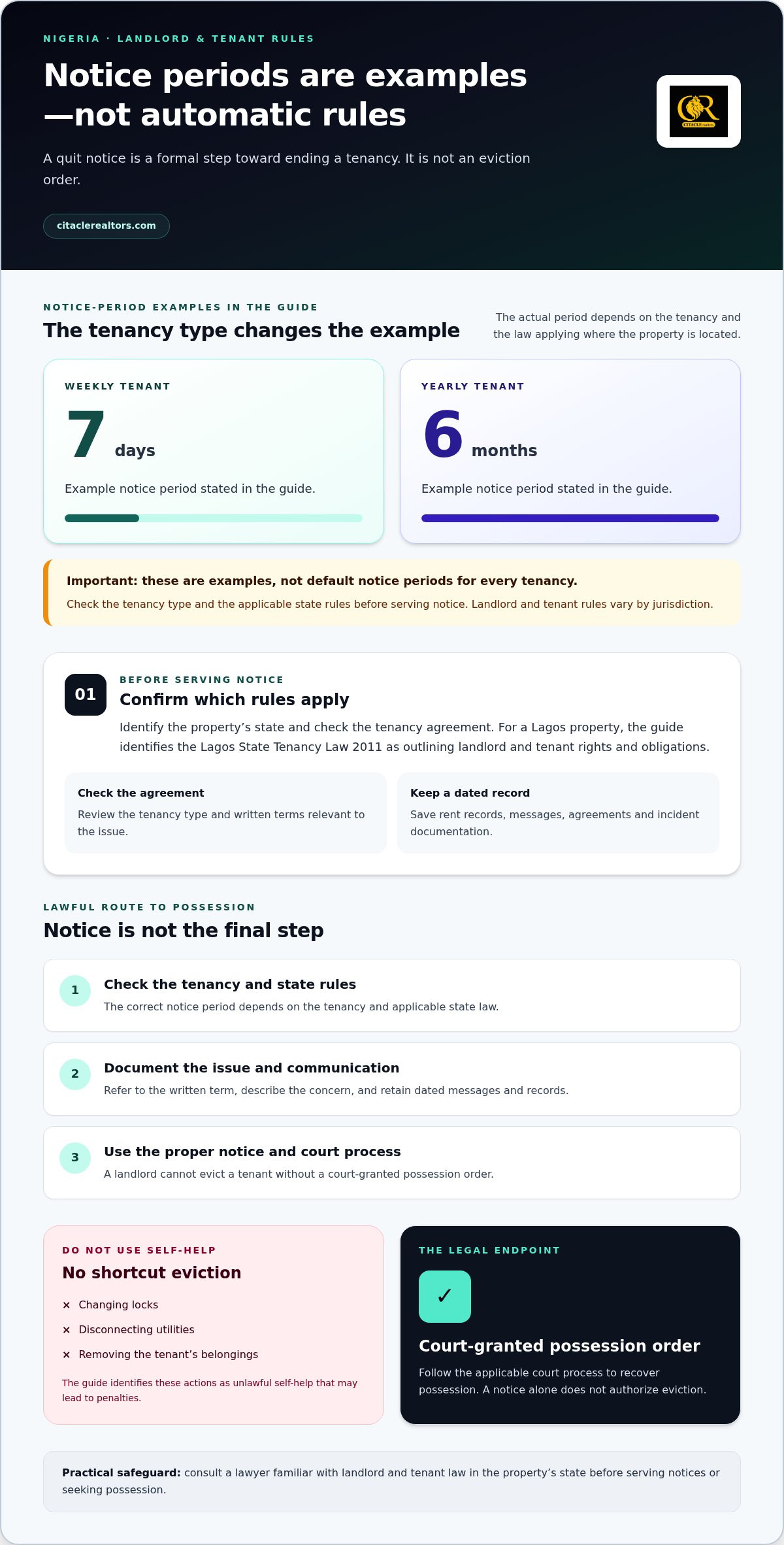
Can a landlord change locks, remove belongings, or disconnect utilities to evict a tenant in Nigeria? No. These actions are identified as unlawful self-help and may lead to penalties. Use the applicable court process to recover possession instead. A landlord also cannot legally evict a tenant without a court-granted possession order.
Unlawful eviction or harassment can expose a landlord to legal complaints and penalties. The consequences depend on the applicable state law and the conduct involved, so avoid threats, force, lock changes, utility disconnection, or removing a tenant’s belongings.
Clear communication is a practical safeguard. If rent is late or a lease rule appears to have been breached, refer to the written term, describe the issue, and keep a dated record of the message and response. Send reminders respectfully, and don’t enter the tenant’s home without permission to pursue unpaid rent. Schedule inspections only when legally permissible.
Some circumstances may support an application for early possession, including a property sale or substantial building work that would make the home uninhabitable. This does not allow a landlord to bypass the required legal process. A court-granted possession order is still necessary before eviction.
Before serving notices or seeking possession, consult a lawyer familiar with landlord and tenant law in the property’s state. Bring the tenancy agreement, rent records, relevant messages, and incident documentation. State-specific advice can help distinguish a lease breach from a lawful reason to seek possession, identify the correct procedure, and reduce the risk of an invalid notice or unlawful eviction.
Common tenant problems, including rent arrears and property damage
If rent is late, start with the tenancy agreement. Confirm the due date and any grace period, then compare them with payment records before contacting the tenant. A missed payment affects rental cash flow, so record the amount outstanding in naira, the relevant rent period, and any part-payment. A clear account helps distinguish an ongoing delay from a bookkeeping error.
Property damage needs evidence, not assumptions. Compare dated, time-stamped photographs from move-in and move-out, then note each affected area and its observed condition. For example, a photograph showing a cracked window at move-out is more useful if the move-in record shows it intact. Keep inspection notes, repair documents, messages, and the tenant’s response together.
Good records connect the problem to the agreement. Save rent statements, reminders, written promises to pay, and damage reports in a dated file. After a conversation, send a brief written summary of what was discussed and any agreed next steps. This creates a consistent timeline if the dispute continues and helps avoid relying on memory when assessing responsibility.
To assess a damage claim, identify the affected item, document its condition, and gather relevant repair information. Compare that evidence with the tenancy agreement and move-in record before deciding whether the tenant may be liable. Keep damage separate from unpaid rent in your records, and pursue recovery through the applicable legal process, not through threats or removal of belongings.
Unpaid rent and poor property care can have separate effects. Missed payments reduce rental income, while neglected maintenance can lead to more frequent repairs and higher upkeep costs. Significant damage may also diminish the property’s value over time. Record each issue separately, so a rent balance does not obscure a maintenance concern or damage claim.
Suspected abandonment calls for care. A quiet property or missed payment alone does not establish that a tenant has abandoned it. Check the abandonment definition and procedure that apply in the property’s jurisdiction, and document relevant observations and attempts to communicate. Don’t enter or treat the property as abandoned until you’re legally entitled to do so. Belongings inside may still require lawful handling.
If repeated tenant concerns make documentation and day-to-day follow-up difficult, consider structured property management support. A clear process for rent records, maintenance reports, and tenant communication can help keep each matter organised while you address the specific breach through the appropriate steps.
3. Quit notices and notices of intention to recover possession
In Nigeria, a quit notice is a formal step toward ending a tenancy, not an eviction order. The correct notice period depends on the tenancy and the law applying in the property’s state. For example, 7 days is given as a notice-period example for weekly tenants, while 6 months is given for yearly tenants. Treat these as examples, not automatic periods for every tenancy.
Begin by reviewing the tenancy agreement and confirming the rental period, relevant dates, and reason for seeking possession. Check the applicable state procedure before preparing a notice. A notice with the wrong period, recipient, or service details can create a dispute and delay the next step. Keep a copy and record when and how it was served.
What court process is required to recover possession from a tenant in Nigeria? Serve the legally applicable notices, then apply to the appropriate court for possession if the tenant does not leave. The landlord must obtain a court-granted possession order before carrying out an eviction.
A Notice of Owner’s Intention to Recover Possession is served after the notice to quit expires, in preparation for court action. It signals that the landlord intends to ask the court to recover the property; it does not itself authorise the tenant’s removal. Keep the expired quit notice, proof of service, agreement, and rent records together.
At the end of a tenancy, distinguish expiry from possession. If the tenant remains, follow the state’s required notices and court procedure rather than assuming the agreement’s end date permits immediate removal. A landlord should not change locks, disconnect utilities, or remove belongings to force the tenant to leave. Those actions bypass the process and can lead to legal penalties or complaints.
Prepare a clear timeline before proceeding: note the tenancy dates, the notice served, its expiry, any response, and the possession sought. If rent arrears or another breach is involved, preserve supporting records and state the grounds accurately. Avoid allegations that cannot be supported by the agreement or evidence.
Because landlord and tenant rules differ between Nigerian states, legal advice should be specific to the property’s location. A lawyer can review the notice wording, service record, applicable time period, and court papers before filing. This is especially useful if the tenant disputes service, challenges the reason for possession, or remains after notices expire.
4. Amicable resolution, negotiation, and mediation
Start by identifying the specific issue and the outcome you need. If rent is late, compare the payment record with the tenancy agreement before approaching the tenant. If noise is the concern, describe the reported dates and impact rather than making general accusations. Calm, factual communication gives both parties a clearer basis for discussion. Emotional messages can intensify conflict and create legal complications, so keep your tone professional and focused on resolving the issue.
Choose a private, practical time to speak, then let the tenant explain their position. Ask questions that clarify the facts, such as whether a payment delay relates to a changed pay schedule or a disputed amount. Explain the lease term involved and what action would resolve the concern. For example, a tenant who pays late consistently may propose a due date aligned with their pay schedule. Consider the proposal against the agreement, and put any accepted change in writing.
For rent arrears, a payment plan can set out the outstanding balance, proposed instalments, payment dates, and how future rent will be handled. Keep the terms realistic and specific. Record each payment against the agreed schedule, and respond promptly if a payment is missed. Don’t treat a verbal promise as a lasting resolution. A written record helps both parties understand what they agreed. A plan does not replace required notices or other legal steps if the dispute remains unresolved.
How can landlords resolve tenant disputes through mediation or a lawyer in Nigeria? Mediation provides a neutral setting where both parties can explain the problem and discuss workable terms. A lawyer familiar with the property’s state can review the agreement and records, explain the applicable legal process, and advise on a suitable next step.
Before mediation, prepare the tenancy agreement, payment history, relevant messages, and a short timeline of events. State the issue plainly, then identify acceptable outcomes, such as settling arrears by agreed dates or clarifying a disputed responsibility. During the discussion, separate facts from assumptions and let the tenant respond. A neutral mediator can help keep the conversation structured when direct discussions have become tense.
After reaching an agreement, write down the responsibilities, dates, and actions each party accepts. Share the record with the tenant and retain a copy with the tenancy documents. If discussions fail, the tenant rejects the agreed terms, or the issue involves possession, seek advice on the formal process for the state where the property is located. Negotiation and mediation can support resolution, but they do not authorise a landlord to bypass legal procedures.
5. Consistent enforcement of lease terms
Apply the written tenancy agreement consistently, whether the issue is late rent, property damage, noise, or unauthorised occupants. If one tenant receives a reminder for late payment, use the same process for another tenant in comparable circumstances. Consistency helps show that action relates to the lease term, not a personal disagreement. It also makes expectations easier to explain and document.
Begin each case by identifying the exact clause and recording the relevant facts. For late rent, compare the due date with payment records. For a noise complaint, note when it occurred and what was reported. For an unauthorised occupant, check what the agreement says and discuss the concern with the tenant. Don’t rely on rumours or treat an allegation as a proven breach.
Use a predictable response sequence: document the concern, contact the tenant professionally, allow them to respond, and record any agreed action. If the issue continues, follow the agreement and rules that apply in the property’s Nigerian state. A reminder is not a substitute for a legally required notice, and no lease clause allows a landlord to bypass the lawful possession process.
Enforcement should be proportionate to the breach. A first report of noise may call for a clear reminder about expectations for quiet use, while repeated incidents need a dated record and a formal response under the agreement. If a tenant disputes property damage, compare the claim with condition records and relevant lease terms before seeking recovery. Apply the same evidence standard to similar complaints.
Inspections can help identify maintenance concerns, but schedule them only when legally permissible. Explain the purpose, communicate respectfully, and record observations accurately. For example, if an inspection identifies damage, note its location and condition, then share the concern with the tenant. Don’t present ordinary wear as tenant-caused damage without supporting evidence.
When a rule needs clarification, discuss the proposed change with the tenant and consider whether a written lease addendum is appropriate. Record the agreed wording and retain it with the tenancy documents. Don’t impose a new charge or penalty unless the agreement and applicable law support it. For an unresolved breach or proposed lease change, a lawyer familiar with the property’s state can help clarify the lawful next step.
A consistent system also makes recurring issues easier to manage. Keep a separate record for each tenant, with the agreement, communications, incidents, and responses in date order. Review that record before sending a formal notice or taking further action. This practical discipline supports fair treatment and helps prevent inconsistent decisions from weakening a landlord’s position.
Citacle Realtors: Property Management
Citacle Realtors offers Property Management for landlords seeking a more organised approach to rental oversight. This can be a practical next step when tenant communication, rent follow-up, maintenance concerns, or consistent lease administration take substantial time. Clear records and steady handling help keep property issues visible and support informed decisions.
Property Management can support ongoing landlord-tenant coordination, while legal advice remains important for state-specific notices, disputes, or possession proceedings. If a property needs attention beyond tenancy oversight, Facilities Management addresses its operational needs. The right support depends on the work involved and the landlord’s priorities.
For a considered discussion about Property Management for your rental property, contact Citacle Realtors.
Build a More Confident Plan for Your Rental Property
Your approach to how to deal with difficult tenants legally can also shape how confidently you manage future tenancies. Use what you’ve learned to set clear expectations from the outset, maintain a reliable record of decisions, and create a consistent process for addressing concerns. That groundwork can support smoother communication and help you make considered choices as your property needs change.
When ongoing property oversight takes time away from your priorities, Citacle Realtors offers Property Management and Facilities Management. Its Residential Land Sales service may also be relevant if your plans extend beyond managing a rental. Each offering supports a different property need, giving you options to consider as your goals develop.
Take the next step at a pace that suits your plans. Explore property support with Citacle Realtors and consider the approach that best fits your investment. With a clear plan and the right support, you can move forward with greater confidence.
Frequently Asked Questions
Need help with a problem tenant?
Begin by organising the tenancy agreement, payment records, and a brief timeline of the issue. If day-to-day tenant contact is becoming difficult, Property Management can support routine interactions and property matters, while a lawyer can advise on state-specific legal steps. When considering how to deal with difficult tenants legally, keep practical property oversight separate from formal legal advice, especially if the dispute involves possession or a complaint.
What Nigerian laws govern landlord-tenant disputes and eviction?
The applicable rules depend on the Nigerian state where the rental property is located. For example, the Lagos State Tenancy Law 2011 outlines landlord and tenant rights and obligations in Lagos State. Don’t apply that law automatically to a property elsewhere. Before acting on a dispute, identify the property’s state, review the tenancy agreement, and understand the local rules governing notices, possession, and the parties’ responsibilities.
What are a landlord’s legal rights and duties in Nigeria?
A landlord may rely on enforceable tenancy terms and pursue possession through the applicable legal process when there is a valid basis. The landlord must also respect the tenant’s rights, avoid unlawful self-help, and follow state-specific requirements. For example, a lease clause about property use can guide a response to a reported breach, but it does not authorise harassment or eviction without the required court order.
What legal steps should a Nigerian landlord take before evicting a tenant?
First, review the agreement and identify the reason for seeking possession. Then check the procedure and notice requirements that apply in the property’s state, preserve records supporting the grounds, and serve the required notice correctly. If the tenant remains, apply to the appropriate court for possession. A landlord must obtain a court-granted possession order before eviction, rather than forcing the tenant out personally.
How much notice must a landlord give to quit in Nigeria?
There isn’t one notice period to use for every Nigerian tenancy; the applicable period depends on the tenancy and state rules. The guidance gives 7 days as an example for weekly tenants and 6 months as an example for yearly tenants. Treat these as examples, not universal deadlines. Check the agreement and the law applying to the property before serving notice, because an incorrect period can complicate possession proceedings.
How can a landlord recover unpaid rent legally in Nigeria?
Start with a rent ledger showing each due date, payment received, and balance outstanding, then compare it with the agreement. Write to the tenant with a clear account and invite a response. A payment plan may help if both parties accept its terms. Keep discussions and receipts. If rent remains unpaid, use the recovery options available under the applicable state procedure, rather than taking belongings or cutting utilities.
How can a landlord serve a valid notice to quit and keep proof of service?
Prepare the notice using the correct tenancy details, grounds, period, recipient, and service procedure for the property’s state. Keep a dated copy of the notice and record when, how, and to whom it was delivered. Retain any acknowledgment or other service evidence with the tenancy file. If the tenant disputes receipt, this organised record can help establish the timeline for legal advice or court proceedings.